Abstract
Growing up, I loved numbers and patterns, but I thought that meant a future “somewhere in finance.” Then, in high school, the TV series “House, M.D.” convinced me I was destined for medicine. Still, I kept choosing more mathematics, almost as a side interest, until a great teacher and a regional maths competition nudged my direction. Entering university sealed it with a bridging course, a great demonstrator, and a leap into a second-year maths class showed me where I truly belonged. Recently, modelling drug diffusion has brought maths and medicine together again.
The Non-Linear Path Towards Mathematics
Throughout my childhood, I loved numbers and patterns. Naturally, I claimed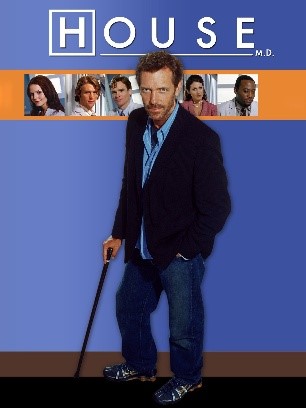 my dream job was “something in finance”, despite not knowing anything about said field other than the ties to money and numbers. But as I grew a little and entered high school, I discovered the TV series “House, M.D.” and became obsessed with medicine. It felt like my trajectory had been decided… or so I thought!
Leading into my senior high school years, it was time to select the subjects that I planned would ultimately lead me into medicine. I chose Biology, Chemistry, Physics, English, Mathematics Advanced, and Mathematics Extension. I chose extension for two reasons: it looked good getting into medicine and could boost my grades. The other reason being… well… I still genuinely loved maths!
That choice ended up being more significant than I expected. I had the same teacher, Mr. R. McVicar, for both my Advanced and Extension classes. I’m sure the story goes the same way for many, but Mr. McVicar presented mathematics in such an exciting and clear way that I found myself spending lots of time studying maths, not because I found it difficult, but because it didn’t feel like a chore to study it, unlike English! Later, during year 11, I entered a regional maths competition, the “Colin Doyle Memorial Prize”, and placed quite well. More on this a little later.
Year 12 rolled around and it was time to decide what subjects I wanted to study for my HSC exams. Unsurprisingly, I took up Mathematics Extension 2, but what was surprising was that I dropped Biology! I saw that The University of Newcastle offered Medical Engineering, so when I saw that it could be a cool mix of maths with a medical twist, it looked like the new path that was perfectly paved for me.
In 2023, I enrolled in the Bachelor of Medical Engineering at The University of Newcastle. With about three months between the HSC and university, I got restless and signed up for NUPrep, a free voluntary program with a few bridging courses. One of the bridging courses I chose was Mathematics for Engineering. The demonstrator for this course, Dr. Scott Sciffer, was great! He was passionate and had the answer to every question I had, even if it wasn’t related to the course. Well, it turned out that he eventually recognised me because he was the person who wrote the Colin Doyle Prize papers every year! From there, Scott presented me the opportunity to enrol in a second-year maths course in my first semester. This course, MATH2340, was a nice mix of linear algebra, real analysis, and proofs. Doing well in this course led me to realise that the true trajectory of my path was actually down the road of Mathematics.
Now that I’ve completed a research project modelling drug diffusion, it feels like the two worlds I’ve been chasing, maths and medicine, have finally reconnected.
References
[1] Rotten Tomatoes. (n.d.). House, M.D.: Season 1. Retrieved from https://www.rottentomatoes.com/tv/house/s01
Noah Cresp
The University of Newcastle