
Yangda Bei
Rouquier Complexes and Link Invariants
Braid group actions on categories arise frequently in representation theory. Upgrading, or categorifying, the braid group via Rouquier complexes generalises this notion and provides more tools to study links and knots. We aim to simplify the calculations of certain link homology theories via this connection and to compute new examples.
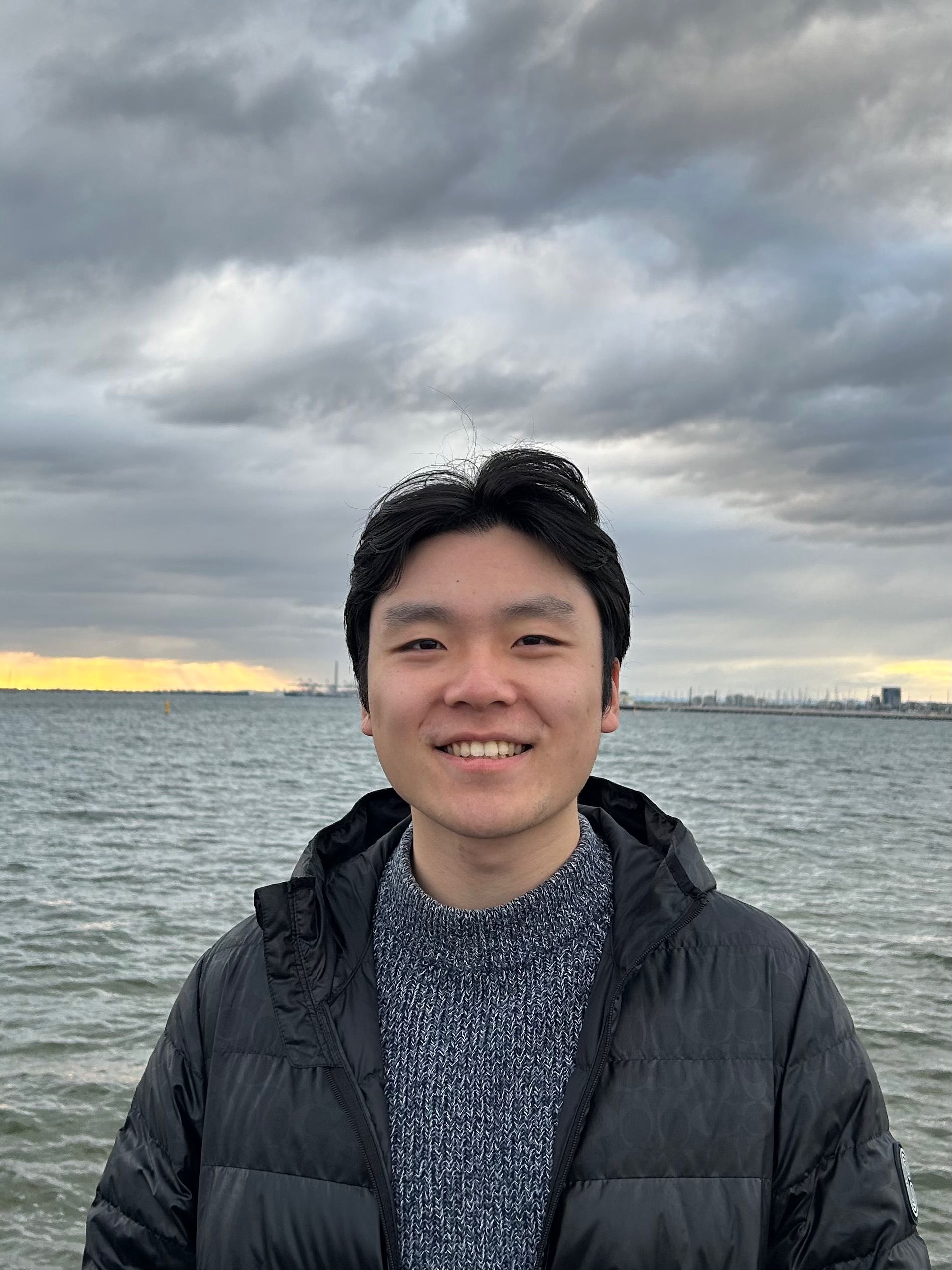
Yangda Bei
Australian National University
Yangda Bei is an incoming honours student studying mathematics at the Australian
National University. Mathematics was always his favourite subject in school, but it took a
winding road through biomedicine, a pit stop in physics, and a detour by computer science
before he realised it was his true calling in university. His current interests include
geometric representation theory and collecting new (co)homology theories, but he is
always on the lookout for interesting interdisciplinary problems involving machine learning.
Outside the classroom, he enjoys discovering and playing new music, reading classics, and
FaceTiming his dog back in Sydney. He hopes to eventually pursue a postgraduate degree
in mathematics.