Abstract:
This blog explores how my love for mathematics first developed. It went from being just another subject we were subjected to at school to a passion. Once you build up the fundamentals, maths becomes increasingly creative as opposed to purely mechanical. I also delve into what made this research project uniquely exciting. The experimentation, failure, and eventually gaining some insight elevated this experience compared to studying it, as I can hopefully add to the field rather than passively consume it.
Blog Post: Can maths be creative?
There was never one defining moment, touching anecdote, or feel-good story that made me love maths. My older brothers always enjoyed it, and, at first, I probably wanted to fit in or beat them at something. As the youngest brother, there is nothing better than finally winning. So, even if it started as fuel for my competitive spirit, I have come to love it, even if it does not give me any bragging rights.
This all began in year 12, where my specialist maths teacher was infamous for his SAC writing. While they admittedly extended our understanding of the coursework, your percentage may well have correlated to your study score. To paint a picture, the previous year he had introduced calculus II into the first SAC, something that almost none of the students had experience with before. Since I was concurrently studying at the Melbourne University Extension Program, I was able to further my understanding of how these topics fit together and start to truly enjoy the challenge his tests posed.
Throughout my research, and in attempting to understand the Curie-Weiss model and its behaviours, I was able to explore maths this same way. To truly understand it, you have to know a little about a lot. I watched many hours of youtube videos and lectures on linear algebra, multivariable calculus and probability, all to tackle a statistical mechanics problem. These fields have been developed by thousands of mathematicians over just as many years and only when you put all of their collective efforts together can you actually answer these fundamental questions.
I loved how creative the project was. When I told friends and family about this, I was usually met with a puzzled look. So many people are used to maths being plugging numbers soullessly into a formula, it is no wonder they don’t enjoy it. Traditional high school maths does not encourage creativity, after all. There were countless times where I stumbled into an issue, tried one approach, then another, and another, to finally reach a solution. Sometimes you have to combine these approaches, other times you have to scrap them all, look into it with your new, more nuanced understanding to then be able to tackle it.
My passion also extends into teaching. I have spent a lot of time over the past couple of years tutoring both VCE and university level maths, trying to combat the notion that maths is boring or impractical. Fostering the love and fascination I have for this discipline into others has been deeply rewarding. Tutoring has developed my own understanding and confirmed for me that I want to go further, not just to teach existing techniques, but to produce my own.
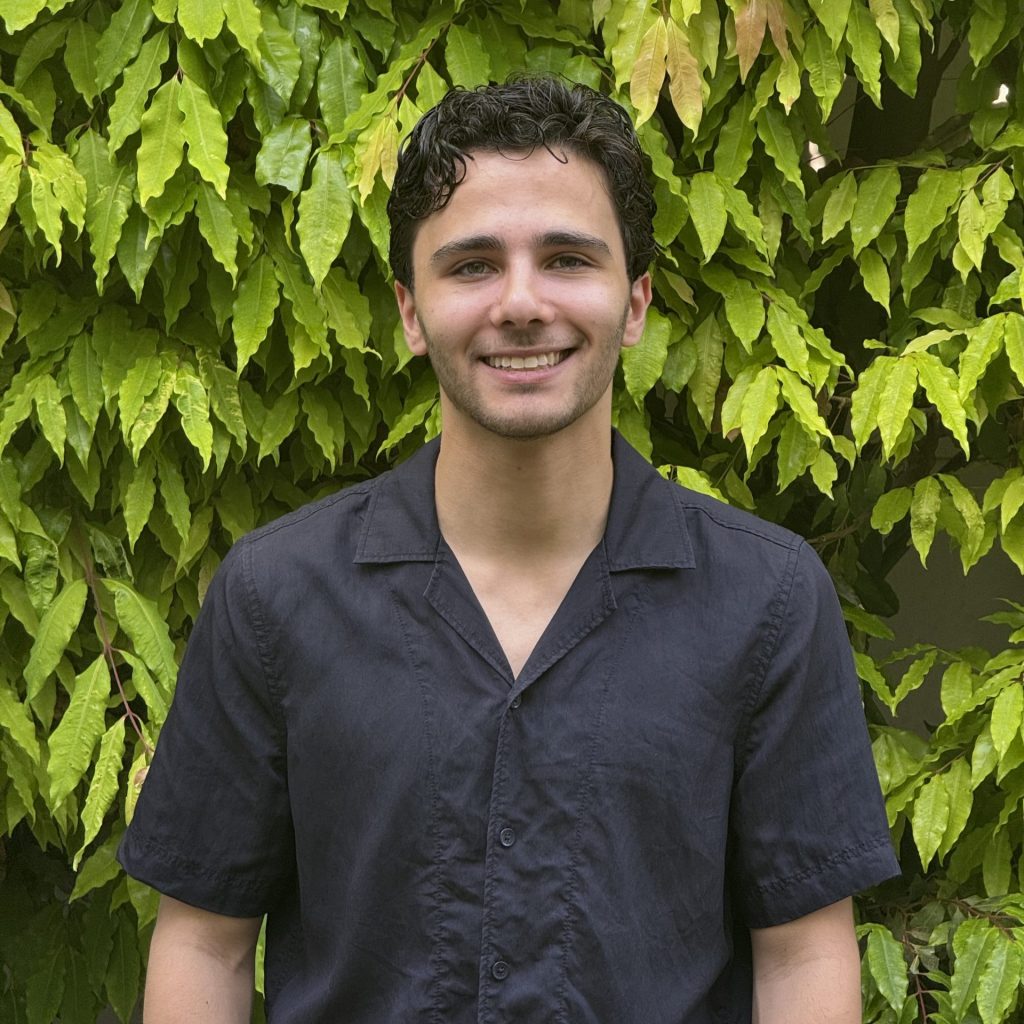
Bradley Landau
Monash University